Your usage
Recent bills and daytime consumption help establish a suitable capacity.
Make more of the power you generate
A grid-connected rooftop system helps offset the electricity you buy, using solar power in the day and your utility connection when generation is low.
Get a rooftop assessment, a system sized to your electricity use and help understanding the utility process.
The complete guide
An on-grid solar system connects rooftop panels to your property’s electrical system and the utility grid. During sunny hours, solar power supplies your home or business first. When generation is greater than your use, eligible surplus may flow to the grid under the approved meter arrangement.
When solar output falls, such as at night or in heavy cloud, your property can draw electricity from the grid as usual. A standard on-grid inverter shuts down during a grid outage for electrical safety, so this setup does not provide backup power unless designed with additional equipment.
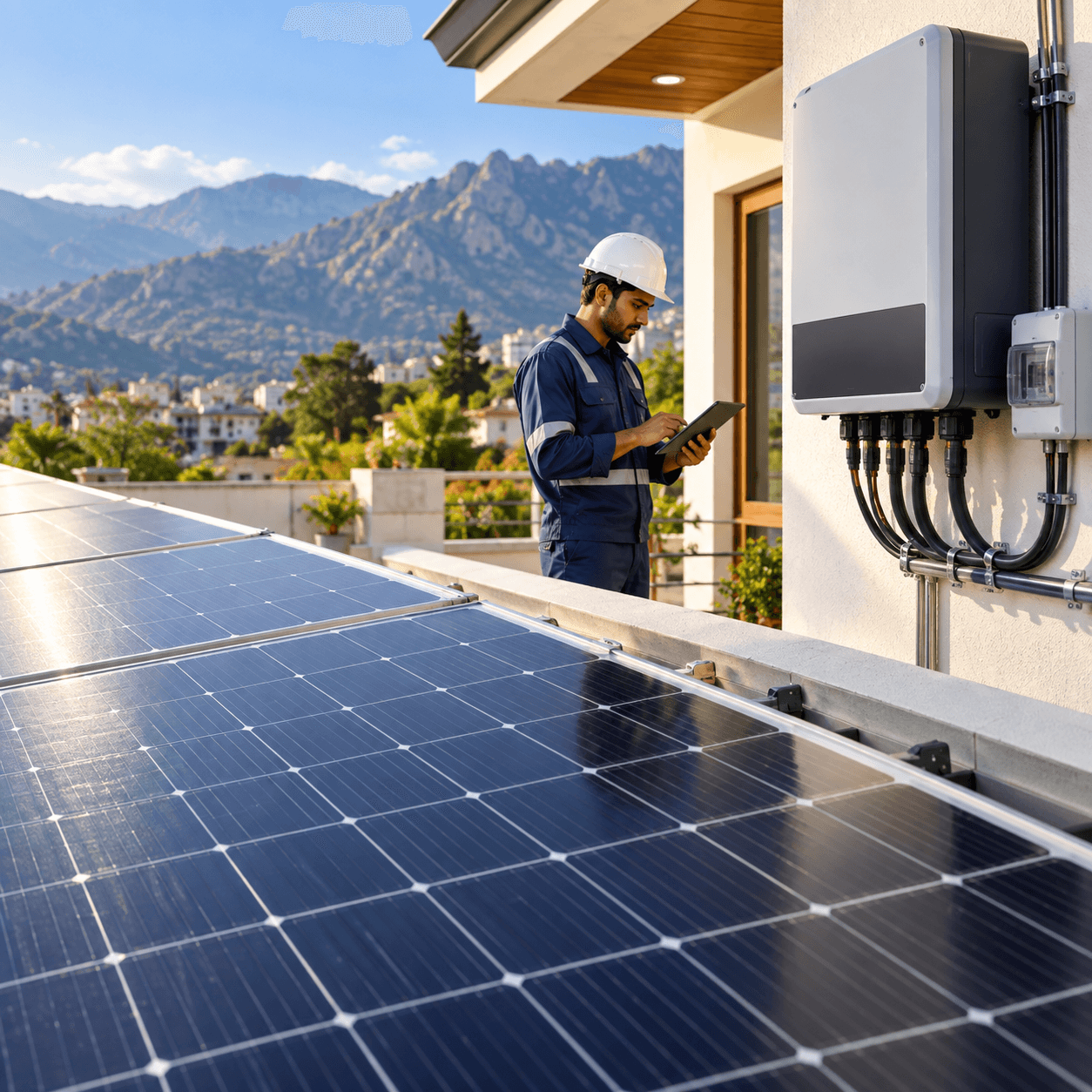
It is a rooftop solar installation that works in parallel with the electricity grid. Panels, an inverter, mounting and electrical safety equipment work together to supply solar power to your property and, where approved, export surplus energy.
If backup during outages is essential, discuss a hybrid system and which selected loads need battery support. A regular grid-tied inverter alone will not keep the home powered during an outage.
Convert daylight into direct-current electricity.
Converts solar electricity for your property and synchronizes with the grid.
Measures grid import and export under the approved utility setup.
Secure the panels and connect the system with suitable protection.
Help establish the permitted capacity, interconnection and meter process.
Planning your investment
The installed price depends on system capacity, panel and inverter selection, roof structure, wiring and the work required at your property. A useful estimate starts with recent electricity bills, a roof survey and a clear equipment list.
Recent bills and daytime consumption help establish a suitable capacity.
Usable area, shade, roof condition and safe access shape the layout.
Sanctioned load, utility requirements and meter arrangements affect the process.
Ask for a written proposal showing the system capacity, equipment models, installation scope, expected generation assumptions, warranties and any exclusions. Eligible residential consumers may be able to apply for scheme support; confirm current eligibility, subsidy amounts and process through the official PM Surya Ghar portal before making a decision.
Read our subsidy guideA standard on-grid inverter switches off during a grid outage for safety reasons. If you need backup, ask us about a hybrid system with batteries.
Read more about net metering, home solar and current subsidy steps.